

What is a tongue-tie release (frenectomy)?
A tongue tie release (frenectomy) is a minor surgical procedure that involves removing a tight band of tissue (frenum) in the mouth, which can cause a restriction of your lips, cheeks, or floor of the mouth (present below the tongue). Typically, frenectomies help to treat a condition known as ankyloglossia (tongue-tie), which is a restriction of the tongue by the frenum in the floor of the mouth specifically, and can lead to issues with chewing, swallowing, speech impediments, breathing issues, and many other issues with oral function.
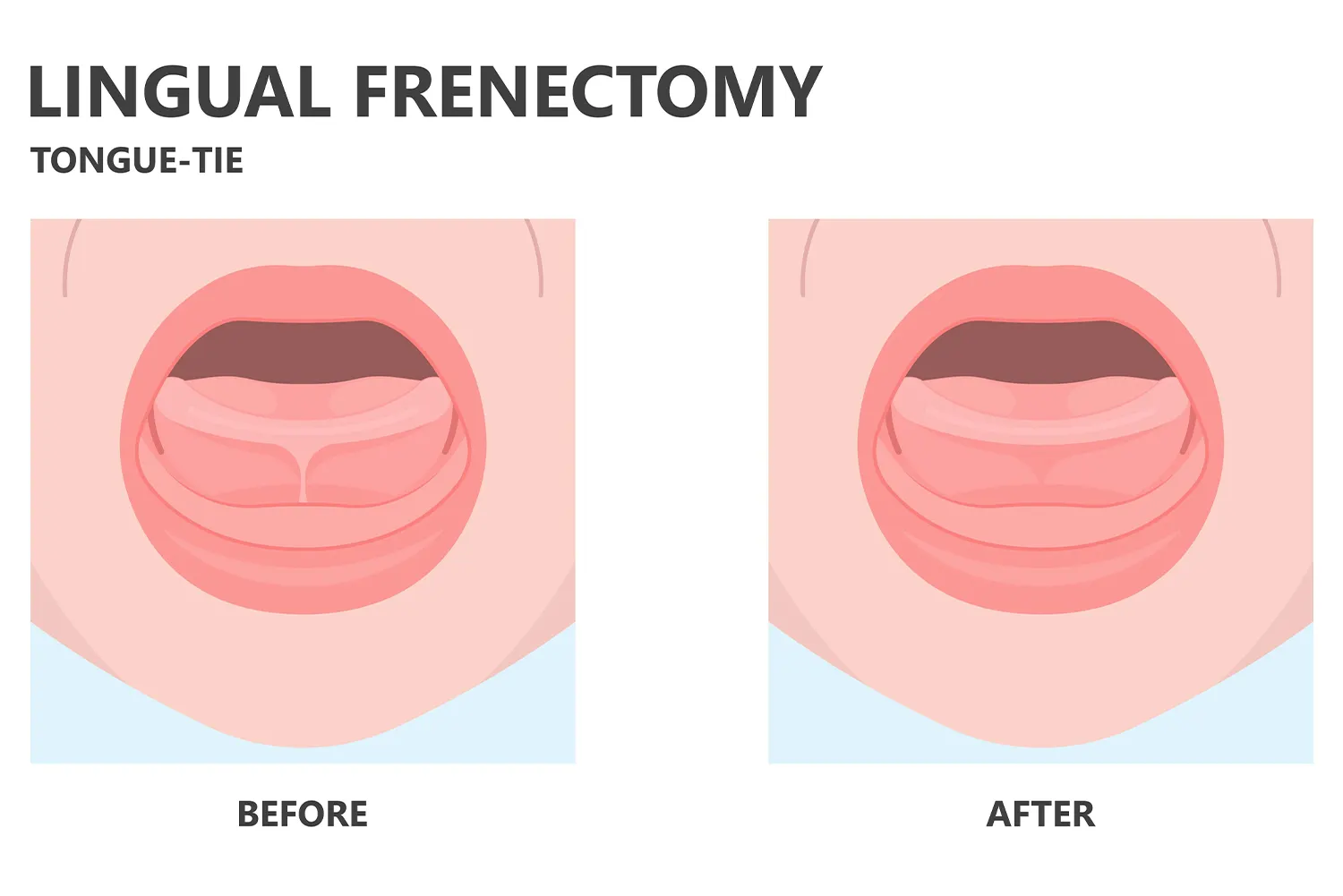

How do we treat it differently at our office?
At Evergreen Dental, we perform a tongue- or lip-tie release known as a functional frenectomy. Coined by Dr. Soroush Zaghi, this approach focuses on identifying and treating the underlying cause of oral dysfunction rather than simply removing tissue. Accompanying this treatment for older children and adults is myofunctional therapy, a form of physical therapy that uses patient-specific exercises to strengthen and retrain the muscles of the tongue, lips, soft palate, cheeks, face, and neck. This combination helps improve oral coordination, speech, swallowing, and overall function.
For infants, however, we do not provide myofunctional therapy. Instead, our team collaborates closely with lactation consultants and bodywork professionals—including chiropractors, craniosacral therapists, infant massage therapists, and feeding specialists—to support healthy feeding and development. This integrated approach ensures comfort, promotes proper oral function, and helps prevent long-term effects associated with tongue and lip ties. The procedure itself is completed using a laser, scissors, or a combination of both, and is designed to deliver optimal comfort and results.

SIGNS THAT YOUR CHILD MIGHT NEED TONGUE-TIE RELEASE
The most obvious sign of tongue-tie is a heart-shaped tongue. The heart shape forms when the lingual frenum holds the center of the tongue in place when they try to lift it, causing a depression at the center of the tongue. Your child may need a frenectomy if you notice this heart shape when they lift or stick out their tongue.
Babies with tongue-tie have difficulty breastfeeding. That’s because the short frenulum restricts the movement of the tongue, which prevents proper airflow while breastfeeding. This could, in turn, lead to malnutrition and problems with weight gain. A tongue-tie release helps avoid both.
Does your baby make clicking sounds while breastfeeding or drinking from their bottle? If so, your child likely has a short frenulum. The clicking sounds indicate your child’s attempt to latch onto your nipples but failing. Most of the milk they draw from your breasts actually leaks to the sides while they try to latch onto the nipples. The baby eventually stops feeding from exhaustion.
HAVE QUESTIONS ABOUT FRENOTOMY? FIND ANSWERS HERE
What symptoms may indicate a need for a functional frenectomy and/or myofunctional therapy?
• Mouth breathing and/or dry mouth during sleep
• Speech Articulation issues
• TMJ pain
• Sleep disordered breathing (SDB) such as snoring, upper airway resistance syndrome (UARS), and obstructive sleep apnea (OSA)
• Clenching/grinding teeth
• Swallowing air-leading to frequent bloating, gas, and other GI issues
• Silent reflux or nighttime reflux
• Chronic gingivitis or periodontal disease despite typical intervention
How Do I Know If I Am a Candidate for a Functional Frenectomy and/or Myofunctional Therapy?
If you or your child have symptoms consistent with restricted oral movement—such as trouble feeding, swallowing, or speaking—an evaluation can determine whether a functional frenectomy is appropriate.
For older children and adults, myofunctional therapy is often recommended to retrain and strengthen oral muscles following treatment. For infants, our collaborative care with lactation and bodywork specialists ensures comprehensive feeding support and comfort before and after the procedure.